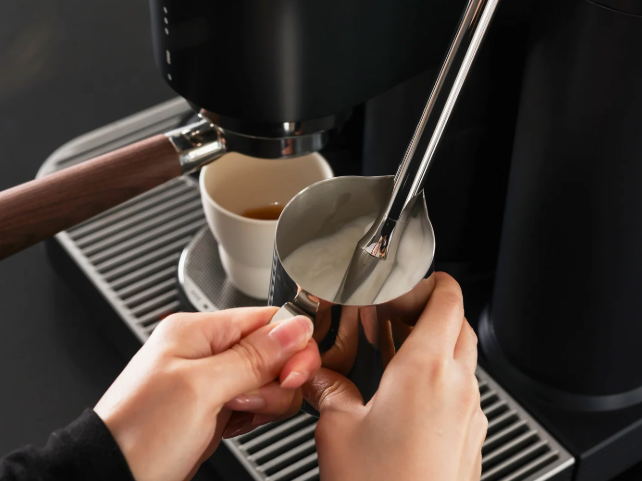
For anyone stepping into the world of home espresso, the morning ritual quickly reveals a fundamental challenge: timing. Brewing a rich, balanced espresso shot requires precise water temperature, while steaming milk for a cappuccino or flat white demands intense heat and high-pressure steam. On many traditional home machines, managing these two conflicting needs creates a frustrating bottleneck.
To overcome this hurdle, coffee enthusiasts increasingly turn to dual boiler technology. By isolating the brewing and steaming processes into independent systems, dual boilers unlock seamless workflow and cafe-level performance right on your kitchen counter.
The Bottleneck of Single Boiler and Heat Exchanger Systems
To appreciate the advantage of dual boilers, it helps to understand how simpler espresso machines manage heat.
On a single boiler machine, one heating chamber handles both extraction and steaming. Because brewing requires water around 200°F (93°C) and steaming requires temperatures above 250°F (121°C), you cannot perform both tasks at once. You must pull your espresso shot, flip a switch to heat the boiler up to steam temperature, froth your milk, and then purge water through the system to cool it back down before pulling another shot. This delay leaves your espresso shot sitting and cooling while you steam milk, degrading the flavor and foam quality.
Heat exchanger (HX) machines improve on this by using a large steam boiler with a copper pipe running through it for brew water. While an HX system allows simultaneous brewing and steaming, temperature control can be unpredictable. If the machine sits idle, water inside the brew pipe overheats, requiring a cooling flush before pulling a shot.
See also: Planning Field Operations for Remote Construction Locations
How Dual Boiler Technology Solves the Problem
A dual boiler machine completely eliminates thermal compromises by using two separate, dedicated boilers operating simultaneously under independent electronic controls:
- The Brew Boiler: Scaled specifically for extraction, this smaller boiler is paired with a digital PID controller. It maintains water within a fraction of a degree of your set temperature, ensuring optimal flavor extraction from your coffee grounds.
- The Steam Boiler: Dedicated entirely to generating high-pressure steam, this larger boiler delivers dry, powerful steam on demand without impacting brewing temperature.
Because neither system borrows heat or pressure from the other, you get maximum thermal stability and instant steam power whenever you need it.
The Parallel Workflow: Extraction and Texturing in Sync
The primary operational advantage of a dual boiler design is speed and seamless multitasking. Instead of treating shot extraction and milk texturing as two separate, sequential chores, you can execute them in parallel.
As soon as you engage the grouphead to start your espresso shot, you can instantly purge the steam wand and begin texturing your milk in the pitcher. With a bit of practice, your milk hits a smooth, glossy microfoam state at the exact moment your 25-to-30-second espresso shot finishes extracting.
Pouring freshly steamed milk directly into a freshly pulled espresso shot preserves the crema, retains drink temperature, and produces superior flavor integration. If you regularly prepare multiple milk drinks for family or guests, this parallel workflow cuts preparation time in half.
Demystifying Machine Mechanics
Understanding the internal architecture of home coffee gear helps demystify the brewing process. When exploring how semi automatic espresso machine works, the distinction between pump activation, boiler heating, and three-way solenoid valves becomes clear.
In a semi-automatic system, the barista controls the grinder setting, tamping pressure, and shot duration, while the machine manages water heating and pressure delivery. Adding dual boilers to a semi-automatic machine gives the barista total creative control without the mechanical limitations of single-temperature heating elements.
Precision Temperature Control and Taste Consistency
Beyond workflow speed, dual boilers elevate espresso taste through superior temperature stability. Espresso extraction is sensitive to thermal shifts; a drop of just a few degrees can cause under-extraction, leading to sour or thin-tasting coffee.
Because the brew boiler in a dual setup does not need to produce high-temperature steam, its temperature remains locked at your target set point. Cold water entering the brew boiler during a shot is quickly stabilized by PID feedback loops. This temperature precision allows you to experiment confidently with delicate light-roast specialty beans, dialing in subtle fruit, chocolate, or floral notes with repeatable consistency shot after shot.
If you want to upgrade your home coffee station for maximum performance and consistency, investing in a high-grade dual boiler espresso machine delivers the ultimate balance of commercial power, thermal stability, and effortless workflow.
Key Considerations Before Choosing a Dual Boiler
While dual boiler setups offer significant performance perks, consider these practical factors when planning your setup:
- Counter Footprint: Dual boilers require more internal space, resulting in larger, heavier machine frames.
- Power Draw: Operating two heating elements requires robust power management, though most modern units efficiently cycle power between boilers to run safely on standard kitchen outlets.
- Warm-Up Time: Heating two separate water volumes can take 15 to 20 minutes, though programmable timers or smart plugs easily automate this process for your morning routine.
Final Thoughts
The ability to brew espresso and steam milk at the exact same time fundamentally changes the home barista experience. By eliminating temperature waiting periods, delivering instant steam pressure, and maintaining precise extraction temperatures, dual boiler machines remove the friction from morning coffee preparation. For anyone passionate about crafting authentic, cafe-quality drinks at home without compromise, dual boiler technology remains the gold standard.
