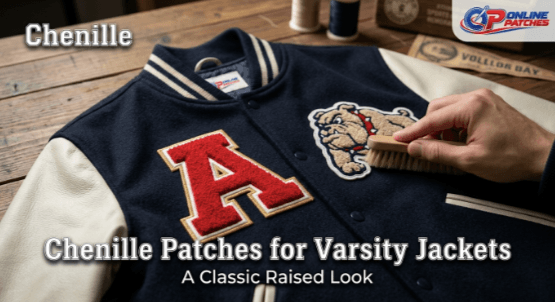
Chenille Patches for Varsity Jackets have proven to be highly popular among individuals who want the iconic look that is common in jackets that are used in schools and colleges. With their thick and fuzzy fabric as well as bold lettering, they are a perfect choice for making your own name, your school or university, the year you graduated, and even your own design.
What makes chenille patches popular is their characteristic structure in terms of looped yarn that makes them different from embroidered patches. Chenille patches offer a unique look that gives a nostalgic look to jackets.
For anyone exploring custom chenille patches UK options, understanding how these patches are made and customised is an important first step towards selecting a design that suits the jacket.
What Makes Chenille Patches Different from Regular Embroidery?
Chenille is an embroidery technique involving the use of looped yarn that creates a soft surface.
Unlike regular embroidery, which involves flat stitches, the loops of chenille create a dimensional effect that is easy to identify. This technique makes Chenille Patches for Varsity Jackets ideal for making large numbers, letters, symbols, and basic shapes.
Felt is the most common material that is used in chenille, while regular embroidery may be used for outlining numbers and letters or any small details requiring more accuracy.
The combination of textures gives varsity jackets their traditional collegiate appearance without making the design unnecessarily complicated.
Which Materials and Backings Create the Best Results?
Material selection affects the patch’s appearance, durability, and attachment. A suitable combination should complement the jacket fabric while supporting regular wear.
Some common materials used are:
- Chenille yarn: To achieve the raised, soft effect and make it look like it is supposed to.
- Felt backing: For providing stability for letters, numbers, and other decorative designs.
- Embroidered borders: For creating edges and making the design look neat.
- Iron-on backing: To provide easy attachment to some fabrics.
- Sew-on backing: To attach firmly, especially in cases where jackets are worn often.
When selecting custom chenille badges, consider the jacket material and intended use. Heavier jackets may benefit from stitched attachment, while suitable lightweight applications can use heat-activated backing.
How Should You Choose the Right Patch Design?
A successful design balances visibility, readability, and personal meaning. Large lettering is often the main feature, but colours, borders, and smaller details also influence the finished appearance.
These things should be taken into consideration when designing a patch:
- Size of letters: Lettering that is readable at a distance should be used.
- Color contrast: Colors that will stand out on the background material of the jacket should be used.
- Font choice: Block and collegiate fonts will go well with traditional designs.
- Design details: Borders should be embroidered to separate the design from the jacket.
- Location: Designs should be placed where they can be seen but do not hinder mobility.
For traditional varsity jacket patches, the left chest is commonly used for school initials or a team emblem, while larger designs can be placed across the back. Sleeve areas are suitable for smaller numbers, years, or achievement symbols.
See also: Top Fantastic Travel Attractions in Madrid
Chenille vs Standard Embroidered Patches: Which Is Better?
Both methods have their pros, but it all comes down to the design and appearance you are aiming for.
| Feature | Chenille Patches | Regular Embroidered Patches |
| Texture | Thick and elevated | Generally flat |
| Look | Soft and vintage look | Detailed stitching look |
| Best for | Big lettering and numberings | Small text and intricate designs |
| Visual effect | Dramatic and 3-dimensional | Detailed and clear look |
| Popular uses | College and sportswear | Uniforms, caps, and work clothing |
Chenille Patches for Varsity Jackets are preferable if the goal is a traditional, bold look of a collegiate jacket. Regular embroidery is better when small text and fine details matter.
How Can You Make Chenille Patches Last Longer?
Proper attachment and maintenance help preserve the patch’s appearance over time. Incorrect washing, excessive heat, and rough handling can damage the yarn or weaken its backing.
Here are some useful tips:
- Read the washing guidelines for your jacket from the manufacturer before you wash it.
- Always turn the jacket inside out whenever it is okay to use a machine washer.
- Use a delicate wash cycle and ensure that it does not use too much heat.
- Never stretch the raised yarn on the jacket.
- Sometimes examine the seams on your jacket to see loose ends.
- Keep the jacket in a dry place.
This will help keep your jacket looking beautiful.
Where Can You Get Custom Chenille Patches Made?
Schools, sports clubs, clothing brands, and individuals can benefit from professionally produced letterman patches that reflect their identity. Before placing an order, prepare the artwork, confirm the required dimensions, select colours, and discuss backing options.
If you are a company or an individual seeking to purchase team jacket patches, you might want to think about requesting samples before making your final purchase decision.
For personalised designs and convenient ordering, explore custom chenille patches online through www.onlinepatches.co.uk. Share your artwork and requirements to find a suitable design for your jackets and team apparel. You can also order online patches by discussing your preferred sizes, colours, quantities, and finishing options before production.
Frequently Asked Questions
1. Are chenille patches suitable for all varsity jackets?
Yes. They can be sewn on to many types of material used to make jackets such as wool or leather jackets if the right process is employed.
2. Can chenille patches include numbers and letters?
Yes. Letters, numbers, initials, and simple symbols are among the most common chenille designs.
3. Can chenille and embroidery be combined?
Yes. Combining raised chenille with detailed embroidery creates contrast and allows smaller design elements to stand out.
4. Are chenille patches washable?
However, it should not be a problem to clean them provided that instructions for washing depend on the type of yarn, backing, and jacket used.
Conclusion
Chenille Patches for Varsity Jackets are a unique method to get that famous raised effect from the world of college style. The material selection, color choice, placement, and even how the patches are attached all play a role in producing the end product. Chenille patches can be long-lasting and distinguishable additions to any jacket.
