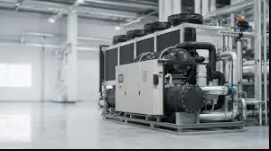
Industrial facilities rely on dependable temperature control to maintain product quality, protect equipment, and keep production running smoothly. Manufacturing processes, refrigeration systems, power generation, and large commercial installations can produce substantial amounts of heat. If this heat is not removed efficiently, equipment may operate under excessive stress, energy consumption can rise, and unplanned shutdowns may become more likely.
Cooling towers help address these challenges by transferring heat from circulating water into the atmosphere. Although the operating principle is straightforward, selecting an appropriate system requires careful consideration of capacity, construction materials, site conditions, water quality, and maintenance requirements.
Businesses planning a new installation or replacing an older unit should evaluate the complete operating environment before making a decision. A suitable cooling solution can improve reliability while supporting better control over long-term operating expenses.
Understanding Industrial Cooling Requirements
Cooling towers are commonly used in chemical processing, food manufacturing, pharmaceutical production, power plants, plastics factories, steel facilities, and commercial HVAC systems. Their main function is to remove heat from water so that the cooled water can return to equipment or processes requiring temperature control.
The cooling process generally involves distributing warm water over a heat-transfer surface while air moves through the tower. Some water evaporates, carrying heat away from the remaining water. The cooled water collects in a basin and is recirculated through the system.
Different industries have different cooling requirements. A food-processing plant may need stable temperatures to protect product quality, while a manufacturing facility may require continuous heat rejection to support machinery. Power generation installations can have particularly demanding cooling loads and strict operating requirements.
For this reason, equipment selection should begin with a clear understanding of the process rather than a general estimate of tower size.
Key Technical Factors in Equipment Selection
Heat Load and Cooling Capacity
Cooling capacity is one of the most important factors when selecting a tower. Engineers need to determine how much heat must be rejected and the temperatures at which the system must operate.
Relevant information includes circulating-water flow rate, hot-water temperature, required cold-water temperature, and the design wet-bulb temperature at the installation site. The difference between hot-water and cold-water temperatures is called the cooling range. The approach is the difference between the cold-water temperature and the ambient wet-bulb temperature.
These measurements help establish the thermal performance required from the tower. Buyers should also consider variations in seasonal weather, changes in production volume, and future expansion plans.
A unit selected without reliable process data may fail to meet performance expectations during demanding conditions. Conversely, unnecessary oversizing can increase initial costs and occupy valuable installation space.
Construction Materials and Durability
The tower’s materials influence its ability to withstand moisture, chemicals, temperature changes, and environmental exposure. Common options include fiberglass-reinforced plastic, galvanized steel, stainless steel, and concrete.
The most appropriate material depends on the application. Facilities exposed to corrosive atmospheres or aggressive water chemistry may need additional corrosion protection or materials selected specifically for their operating conditions.
Buyers should also review the quality of internal components, such as fill media, drift eliminators, water distribution nozzles, fans, motors, bearings, and access platforms. These components affect heat transfer, airflow, water loss, and maintenance requirements.
Durability should be assessed as part of the complete system rather than through the outer structure alone. Internal parts that are difficult to inspect or replace may increase maintenance costs over time.
Space, Airflow, and Installation Conditions
Available space can influence which cooling tower configurations are practical. Before finalizing a design, project teams should examine foundation capacity, equipment dimensions, lifting access, piping routes, electrical connections, drainage, and clearance for servicing.
Airflow is equally important. Nearby walls, buildings, exhaust outlets, or other equipment can obstruct air movement or cause warm, humid discharge air to return to the intake. This recirculation can reduce cooling performance, particularly during hot weather.
Noise, drift, and local environmental requirements should also be considered. Early coordination between the engineering team and equipment provider helps identify site limitations before installation begins.
Comparing Different Cooling Tower Configurations
Cooling towers are available in several designs, each with characteristics that suit particular applications.
Counterflow and Crossflow Towers
Counterflow towers move air upward while water descends through the unit. The opposing movement of air and water supports heat transfer and can be useful when a compact arrangement is required.
Crossflow towers move air horizontally across falling water. Depending on the design, their water distribution systems may provide convenient access for inspection and maintenance.
The choice between these designs should reflect the required performance, installation footprint, water distribution arrangement, and service access. Neither configuration is automatically superior in every application.
Induced-Draft and Forced-Draft Systems
Induced-draft towers use fans near the air discharge to draw air through the equipment. This configuration is widely used because it can support effective airflow management and help reduce warm-air recirculation when properly installed.
Forced-draft towers use fans to push air into the unit. Their suitability depends on the installation layout, operating conditions, and engineering design.
When evaluating fan systems, buyers should consider motor efficiency, airflow requirements, vibration, noise, and the accessibility of mechanical components. Fan performance has a direct relationship with electricity consumption and can influence the overall cost of operating the tower.
Packaged and Modular Systems
Packaged units can simplify delivery and installation when their capacity matches the project’s needs. Modular towers can provide flexibility for facilities that expect cooling demand to increase over time.
Large industrial projects may require custom-engineered solutions to accommodate unusual heat loads, restricted spaces, demanding water conditions, or specialized process requirements.
The appropriate design should be selected after reviewing the actual application. Familiarity with a particular tower type is not a substitute for engineering calculations and site-specific planning.
How to Evaluate Equipment Providers
Comparing the top cooling tower manufacturers requires more than checking product catalogues or headline prices. Buyers should examine technical knowledge, manufacturing quality, project experience, documentation, and after-sales support.
Technical Expertise and Relevant Experience
An experienced provider should be able to explain how its proposed equipment meets the project’s thermal and mechanical requirements. Technical discussions should cover cooling capacity, construction materials, fan arrangements, water distribution, drift control, and operating conditions.
It is useful to ask about projects involving similar industries, heat loads, environmental conditions, or water chemistry. Relevant experience can help demonstrate familiarity with practical challenges that may not be obvious during an initial quotation.
Suppliers should also identify the operating assumptions behind their performance estimates. Buyers need clear information about the conditions under which the stated capacity can be achieved.
Quality Assurance and Documentation
Manufacturing quality influences reliability, service life, and maintenance requirements. Buyers should review the available information about material specifications, component quality, inspection procedures, and applicable performance standards.
Project documentation is another important consideration. Depending on the scope of supply, it may include general arrangement drawings, foundation details, electrical requirements, performance data, operation manuals, and spare-parts lists.
Complete documentation helps project teams coordinate installation and gives maintenance personnel the information they need to operate the equipment correctly.
Warranty and Technical Support
Cooling towers require regular inspection, and some components eventually need replacement. Buyers should understand warranty coverage, service arrangements, expected response procedures, and the availability of replacement parts.
It is also important to clarify installation and commissioning responsibilities before signing a purchase agreement. When these responsibilities are clearly defined, project teams can reduce delays and avoid disputes over the scope of work.
For facilities that operate continuously, dependable access to technical assistance can be especially valuable because cooling interruptions may affect production throughout the plant.
Managing Water Quality and Environmental Performance
Water quality has a major influence on cooling tower efficiency. As water evaporates, dissolved minerals become more concentrated in the circulating water. If this concentration is not controlled, scale and deposits may form on heat-transfer surfaces. Corrosion and biological growth can also affect performance and equipment condition.
An appropriate water-treatment program should account for the makeup-water source, operating conditions, materials, and applicable requirements. Depending on the system, treatment may include filtration, chemical dosing, conductivity monitoring, and controlled blowdown.
Cooling towers can support the growth of microorganisms, including Legionella, when water-management practices are inadequate. Facility operators should follow relevant public-health regulations and maintain a documented water-management program. Cleaning, disinfection, monitoring, and corrective actions should be performed according to the facility’s risk assessment and applicable guidance.
Drift eliminators help limit water droplets carried out of the tower with exhaust air. Regular inspection ensures these components remain in suitable condition. Noise control and responsible water consumption should also be included in environmental planning.
Building an Effective Maintenance Strategy
Preventive maintenance helps protect cooling performance and reduce unexpected equipment failures. A structured maintenance plan should reflect manufacturer recommendations, operating hours, water quality, and the consequences of downtime.
Important activities include inspecting fill media for deposits, checking water distribution nozzles, monitoring fan and motor condition, examining structural supports, and maintaining appropriate water chemistry.
Maintenance teams should record important operating measurements, including water temperatures, flow rates, energy use, and vibration where relevant. Changes in these readings may indicate developing problems before they cause a noticeable decline in production performance.
Replacement components should be selected according to the equipment’s specifications. Using unsuitable parts can affect airflow, water distribution, mechanical reliability, or heat-transfer performance.
A documented maintenance history also helps businesses identify recurring issues and decide when refurbishment or replacement may be more economical than continued repair.
Looking Beyond the Initial Purchase Price
The purchase price represents only one part of the total cost of ownership. Electricity, water consumption, treatment chemicals, labour, replacement parts, and production interruptions can contribute substantially to lifetime expenses.
A less expensive unit may cost more over time if it consumes additional energy or requires frequent repairs. A more efficient system may justify a higher initial investment when it provides measurable savings and improved operational reliability.
When comparing proposals, businesses should use consistent technical specifications and review the complete scope of supply. This includes performance conditions, included components, delivery arrangements, installation responsibilities, warranty coverage, and service commitments.
A life-cycle cost assessment can provide a more balanced comparison when realistic assumptions are available for operating hours, energy prices, water costs, maintenance, and expected service life.
Frequently Asked Questions
1. What information is needed before requesting a cooling tower quotation?
Buyers should prepare the required water flow rate, hot- and cold-water temperatures, process heat load, site wet-bulb conditions, available space, water quality information, and expected operating schedule. These details help suppliers propose equipment that fits the application.
2. How can a facility improve cooling tower efficiency?
Efficiency can be supported through correct equipment selection, clean heat-transfer surfaces, proper airflow, effective water distribution, suitable water treatment, and routine maintenance. Monitoring operating data also helps identify performance changes early.
3. Why should long-term service support be considered before purchasing?
Cooling tower components experience wear and may require repair or replacement during their service life. Accessible spare parts, clear warranty terms, technical documentation, and dependable support help reduce maintenance uncertainty and limit downtime.
Conclusion
A reliable industrial cooling system begins with a clear understanding of process requirements and careful evaluation of equipment design. Cooling capacity, construction materials, airflow, installation conditions, water treatment, and maintenance planning all contribute to long-term performance.
Businesses should assess equipment providers according to technical expertise, documented quality, relevant project experience, and ongoing service capabilities. By considering lifetime operating costs alongside the initial investment, industrial facilities can make more informed decisions and build cooling systems that support reliable production for years to come.
