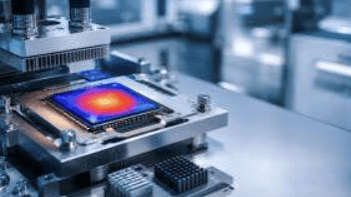
Temperature can influence the performance, durability, and reliability of products across many industries. Electronic components may behave differently when exposed to heat or cold, while plastics, coatings, adhesives, and mechanical assemblies can change their properties as environmental conditions shift. Identifying these effects early helps manufacturers improve product designs and reduce the risk of unexpected failures.
For engineering teams and quality-control laboratories, temperature testing provides a controlled way to evaluate how materials and products respond to specified thermal conditions. However, not every laboratory has the space or workload to justify a large environmental testing system. Compact testing equipment can offer a practical alternative when specimens are relatively small and testing requirements are clearly defined.
Choosing the right chamber requires an understanding of test objectives, temperature range, specimen dimensions, control accuracy, and daily operating needs.
The Role of Temperature Testing in Product Evaluation
Temperature testing exposes a specimen to defined thermal conditions so that engineers can observe changes in performance or physical properties. Depending on the procedure, the test may involve maintaining a constant temperature, moving between different setpoints, or exposing a product to repeated temperature changes.
The objective is not simply to heat or cool a sample. It is to establish controlled conditions that allow meaningful observations and comparisons.
For example, an electronic component may need to operate within a specified temperature range. A plastic part may require evaluation for dimensional changes, while an adhesive joint may be examined for changes in strength after thermal exposure.
The appropriate procedure depends on the product’s intended application and the relevant technical specification. A chamber used for constant-temperature conditioning may not be suitable for every rapid temperature cycling or thermal shock test.
Why Compact Testing Systems Can Be Useful
Making Better Use of Laboratory Space
Laboratory space is often shared by product development, inspection, measurement, and other activities. Large testing systems can require substantial floor area, while many routine evaluations involve small components that do not need a large working volume.
Compact equipment can help laboratories use available space efficiently. A benchtop configuration may fit into an established work area, provided that ventilation, electrical supply, clearance, and other installation requirements are satisfied.
Before choosing a small system, laboratories should measure the specimens and fixtures they expect to test. The usable internal volume matters more than the chamber’s external dimensions alone.
Supporting Frequent Small-Sample Tests
Research teams may need to test several component designs, compare material samples, or verify changes to a manufacturing process. A smaller chamber can be convenient when the testing workload consists mainly of individual components or limited sample batches.
For example, engineers developing a new sensor housing may compare multiple prototypes under the same temperature conditions. Keeping the procedure consistent makes it easier to identify differences between designs.
A compact system can also support incoming material checks or routine quality-control tasks when its performance matches the required procedure.
Improving Workflow Flexibility
When a laboratory uses separate workstations for different testing activities, accessible equipment can help simplify sample preparation and inspection. Operators may be able to load small specimens, initiate a test, and perform follow-up checks without reorganizing an entire laboratory area.
However, convenience should not replace technical suitability. A chamber must still provide the required temperature range, stability, uniformity, and monitoring functions.
Applications Across Different Industries
Electronics and Electrical Components
Electronic devices and components can be sensitive to temperature changes. Heat may affect electrical performance, while cold conditions can influence batteries, displays, seals, and certain materials.
Temperature testing helps engineers examine whether a component continues to function as expected within its intended operating environment. Depending on the test objective, evaluations may focus on electrical output, physical condition, startup behavior, or performance after thermal conditioning.
Small sensors, connectors, circuit-board components, and miniature control units may be suitable for compact testing systems when the chamber can accommodate their fixtures and required instrumentation.
Plastics, Polymers, and Rubber Materials
Polymers may expand, contract, soften, or become less flexible as temperature changes. Rubber materials can also exhibit changes in elasticity and mechanical response.
Manufacturers may use controlled temperature exposure to compare material formulations, investigate dimensional stability, or evaluate whether a component remains suitable for its expected operating conditions.
Results should be interpreted according to the material, specimen geometry, conditioning period, and test method. A short exposure cannot necessarily predict how a material will behave after months or years of service.
Automotive and Industrial Components
Automotive and industrial products often operate in environments where temperature conditions vary. Sensors, seals, connectors, small actuators, and plastic housings may require evaluation to support design verification.
A compact chamber can be useful for selected component-level tests, particularly during prototype development or routine inspection. Larger assemblies may require more internal space, specialized fixtures, or a system designed for more demanding temperature transitions.
The equipment should therefore be selected according to the component’s actual requirements rather than the general industry in which it will be used.
Research and Educational Laboratories
Universities, material research facilities, and engineering laboratories frequently investigate how temperature affects experimental samples. A compact system may support repeatable conditioning for small specimens or controlled experiments.
Researchers should document the temperature profile, exposure time, sample arrangement, and measurement methods. These records make it easier to reproduce experiments and evaluate whether observed changes are associated with temperature or other factors.
Selecting Suitable Temperature Testing Equipment
Equipment selection should begin with a clear definition of the intended test. Consider the following technical and practical factors before making a purchase.
Temperature Range and Performance
Determine the minimum and maximum temperatures required by the test procedure. Then confirm that the equipment can operate within that range under realistic loading conditions.
It is also important to distinguish between temperature range, stability, and uniformity. Range describes the limits the chamber can reach. Stability concerns how much the temperature changes over time at a given location, while uniformity describes temperature differences within the working space.
These characteristics affect whether the chamber can support a particular test. Specifications should be checked against the manufacturer’s technical documentation and, where necessary, verified through appropriate measurement.
Working Volume and Sample Arrangement
A chamber should accommodate the specimen, fixtures, and any required sensors without obstructing airflow or creating unsuitable thermal conditions.
If multiple samples are tested simultaneously, their placement should allow the required exposure conditions to be achieved. Overloading the working area can affect airflow and produce results that are difficult to compare.
Consider future testing needs as well as current samples. A slightly larger working volume may be beneficial if upcoming projects are likely to involve different specimen shapes or fixtures.
Temperature Control and Monitoring
Reliable testing requires appropriate control of temperature and a way to monitor the conditions applied to the specimen. Depending on the application, useful features may include programmable setpoints, timed operation, alarms, and recorded temperature data.
The required functions depend on the test procedure. A simple conditioning task may need fewer programming features than a test involving several temperature stages.
Laboratories should also establish how the chamber’s performance will be checked and how test records will be stored.
Installation and Maintenance
Before installation, review the electrical requirements, ambient operating conditions, ventilation needs, and clearance around the equipment. Confirm that the intended location provides safe access for loading specimens and performing routine maintenance.
Regular inspection can help identify issues such as damaged seals, unusual operating behavior, or problems with temperature control. Maintenance and calibration activities should follow the manufacturer’s recommendations and the laboratory’s quality procedures.
A LIB industry portable temperature test chamber may be worth evaluating when a laboratory needs a compact solution for specified temperature tests. The final selection should be based on the actual model’s verified capabilities, working dimensions, and compatibility with the required test method.
Preparing Samples for Repeatable Results
Careful preparation is essential for meaningful temperature testing. Start by defining the purpose of the test and documenting the specimen’s initial condition. Record relevant details such as material type, product model, batch identification, dimensions, and any visible defects.
Next, determine the required conditioning period and temperature profile. If the test includes functional measurements, establish how those measurements will be collected before, during, or after exposure.
Place specimens in the chamber according to the test procedure. Avoid arrangements that block circulation or allow samples to touch surfaces in ways that could affect the results. Use appropriate fixtures when necessary and position temperature sensors according to the measurement plan.
Once the test is complete, allow specimens to return to the required inspection conditions if the procedure calls for it. Some materials may change temporarily during heating or cooling, so the timing of post-test measurements can influence interpretation.
Finally, document deviations, observations, and measurement results. If a specimen fails, investigate the possible cause rather than assuming temperature alone was responsible. Sample preparation, manufacturing variation, fixture design, and test setup may also contribute.
See also: Real-Time Gas Leak Detection with Advanced Thermal Camera Technology
Common Mistakes to Avoid
One frequent mistake is choosing equipment solely because its advertised temperature range appears suitable. Range alone does not confirm adequate uniformity, stability, recovery performance, or working capacity.
Another mistake is ignoring the effect of sample loading. A chamber may behave differently when loaded with specimens and fixtures than when operating empty. Testing procedures should account for the actual configuration.
Laboratories should also avoid treating all temperature tests as interchangeable. Constant-temperature conditioning, temperature cycling, and thermal shock testing have different requirements and may call for different equipment.
Finally, test records should be complete enough to support repeatability. Without documented conditions and inspection criteria, comparisons between samples or production batches may be unreliable.
Frequently Asked Questions
1. What is a compact temperature test chamber used for?
It is used to expose suitable samples or components to controlled temperature conditions. Applications may include electronics evaluation, material conditioning, prototype development, and selected quality-control procedures.
2. How do I determine the appropriate chamber size?
Consider the dimensions of the largest specimen, required fixtures, sensor placement, and expected future testing needs. The internal working volume must accommodate the sample arrangement without compromising the required temperature conditions.
3. Can one chamber perform every type of temperature test?
No. Different procedures may require different temperature ranges, transition rates, working volumes, or control capabilities. Always compare the equipment specifications with the relevant test method before deciding whether a system is suitable.
Conclusion
Compact temperature testing equipment can help laboratories evaluate small components, investigate material behavior, and support routine quality-control activities without using unnecessary floor space. Its effectiveness depends on matching the equipment to the intended procedure and maintaining consistent operating practices.
By reviewing temperature performance, working volume, control features, installation requirements, and maintenance needs, engineering teams can make a more informed equipment choice. Careful specimen preparation and complete documentation then help turn individual tests into reliable evidence for product development and quality improvement.
